

Understanding Key Regulatory Bodies in Nigeria: A Complete Guide for Business Leaders

by Counseal Team
Updated January 27, 2025

Nigerian businesses must navigate multiple regulatory frameworks to operate successfully. This comprehensive guide explains the crucial regulatory bodies, their roles, and practical strategies for ensuring compliance while growing your business.
- Introduction
- Recent Regulatory Evolution in Nigeria
- Core Regulatory Bodies and Their Functions
- Real-World Compliance Success Stories
- Understanding Compliance Costs
- Industry-Specific Compliance Frameworks
- Common Violations and Prevention Strategies
- Technology Solutions for Compliance
- Practical Compliance Checklists
- Conclusion and Action Steps
Introduction
Nigerian businesses must navigate multiple regulatory frameworks to operate successfully. This comprehensive guide explains the crucial regulatory bodies, their roles, and practical strategies for ensuring compliance while growing your business.
Recent Regulatory Evolution in Nigeria
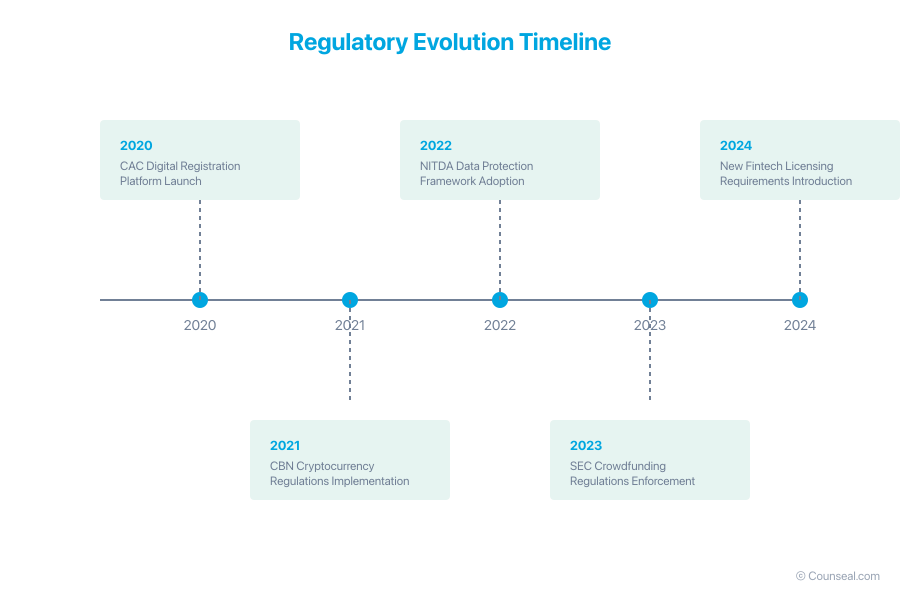
Significant Changes (2020–2024)
- 2020: CAC digital registration platform launch
- 2021: CBN cryptocurrency regulations implementation
- 2022: NITDA’s data protection framework adoption
- 2023: SEC crowdfunding regulations enforcement
- 2024: New fintech licensing requirements introduction
Core Regulatory Bodies and Their Functions
Central Bank of Nigeria (CBN)
- Primary Role: Monetary policy regulation and banking sector oversight
- Key Areas:
- Financial stability
- Banking supervision
- Payment systems regulation
- Foreign exchange management
Business Impact: Recent CBN policies have transformed business operations:
- Cashless policy implementation
- Payment service bank regulations
- Foreign exchange management guidelines
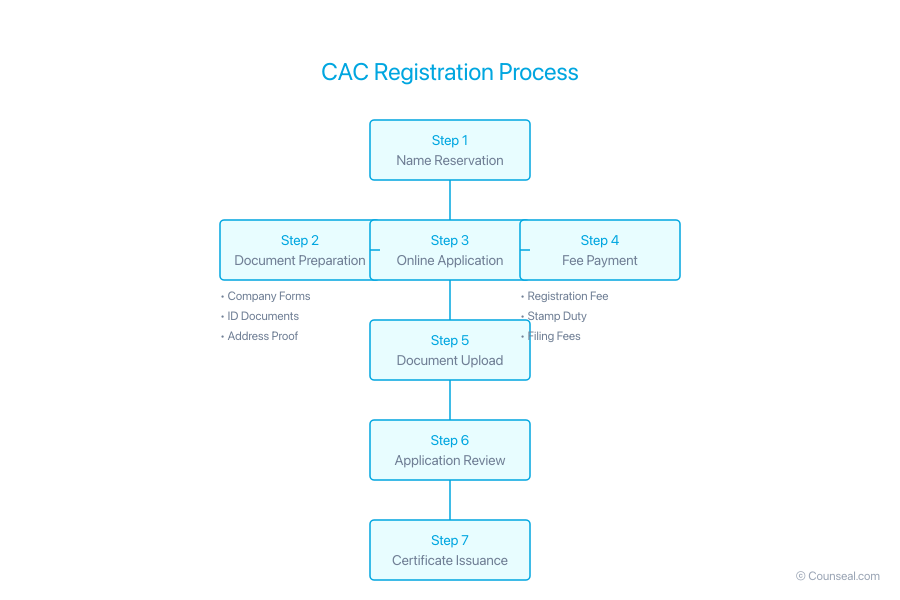
Corporate Affairs Commission (CAC)
- Primary Role: Business registration and corporate regulation
- Key Requirements:
- Company registration
- Annual returns filing
- Corporate compliance monitoring
Securities and Exchange Commission (SEC)
- Primary Role: Capital market regulation
- Key Functions:
- Investment protection
- Market efficiency maintenance
- Securities trading oversight
National Agency for Food and Drug Administration and Control (NAFDAC)
- Primary Role: Food and drug quality control
- Key Areas:
- Product registration
- Quality standards enforcement
- Consumer protection
Real-World Compliance Success Stories
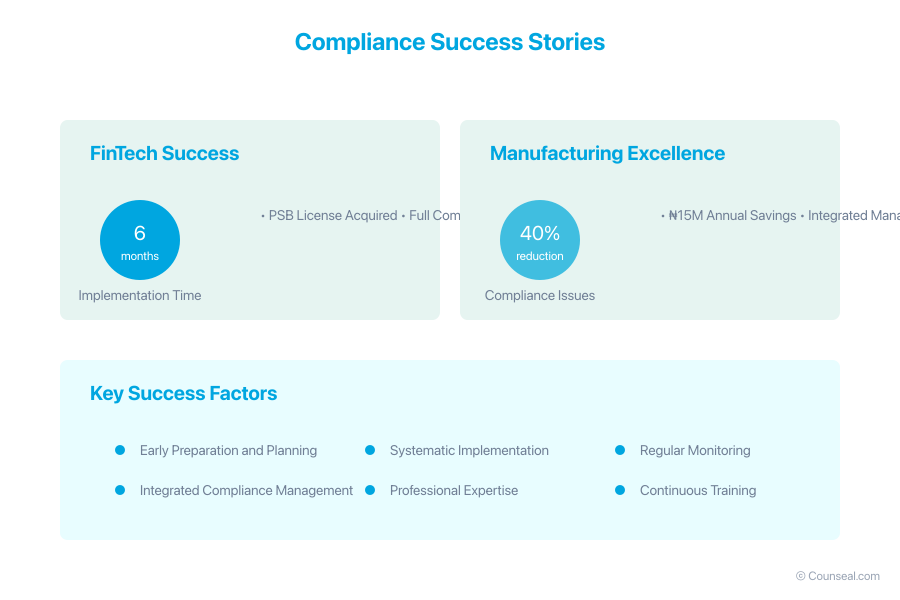
Case Study 1: FinTech Compliance Success
- Challenge: Meeting new PSB regulations
- Approach: Implemented comprehensive compliance framework
- Timeline: 6-month implementation
- Result: Successful PSB license acquisition
- Key Learnings: Early preparation and systematic approach crucial
Case Study 2: Manufacturing Sector Excellence
- Challenge: Multiple regulatory requirements
- Solution: Integrated compliance management system
- Impact: 40% reduction in compliance issues
- Cost Savings: ₦15 million annually in prevented penalties
Understanding Compliance Costs
Direct Costs Breakdown
- Registration Fees
- Initial registration
- Annual renewals
- Certification costs
- Professional Services
- Legal consultation
- Audit fees
- Compliance officers
Indirect Costs
- Operational Expenses
- Staff training programmes
- Documentation systems
- Compliance software
- Regular audits
- Resource Allocation
- Dedicated compliance team
- Technology infrastructure
- Ongoing monitoring systems
Industry-Specific Compliance Frameworks
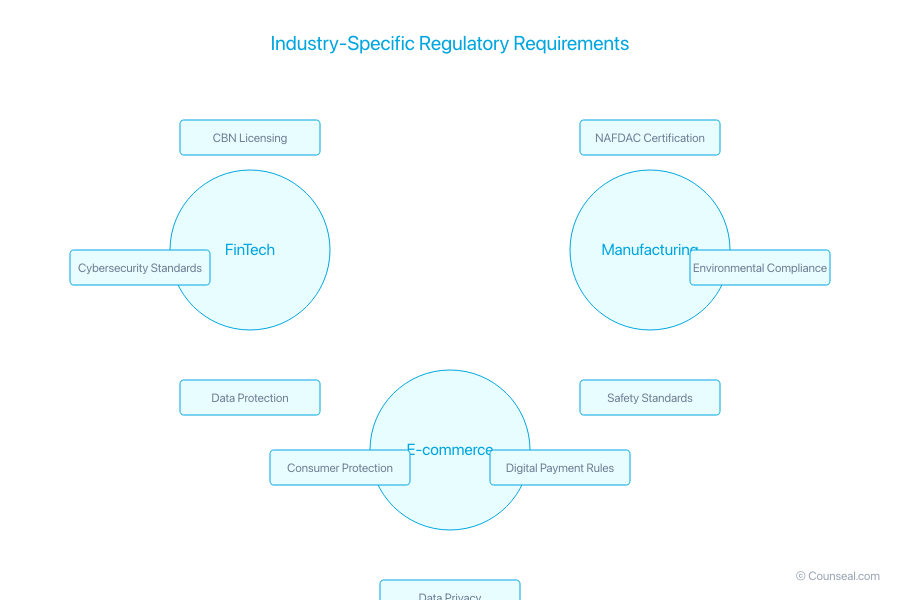
FinTech Sector
- CBN licensing requirements
- Cybersecurity standards
- Data protection compliance
Manufacturing Sector
- NAFDAC certifications
- Environmental compliance
- Safety standards
E-commerce Operations
- Consumer protection requirements
- Digital payment regulations
- Data privacy compliance
Common Violations and Prevention Strategies
Frequent Compliance Issues
- Documentation Failures
- Missing records
- Incomplete filings
- Outdated permits
- Operational Violations
- Unauthorized practices
- Missed deadlines
- Inadequate monitoring
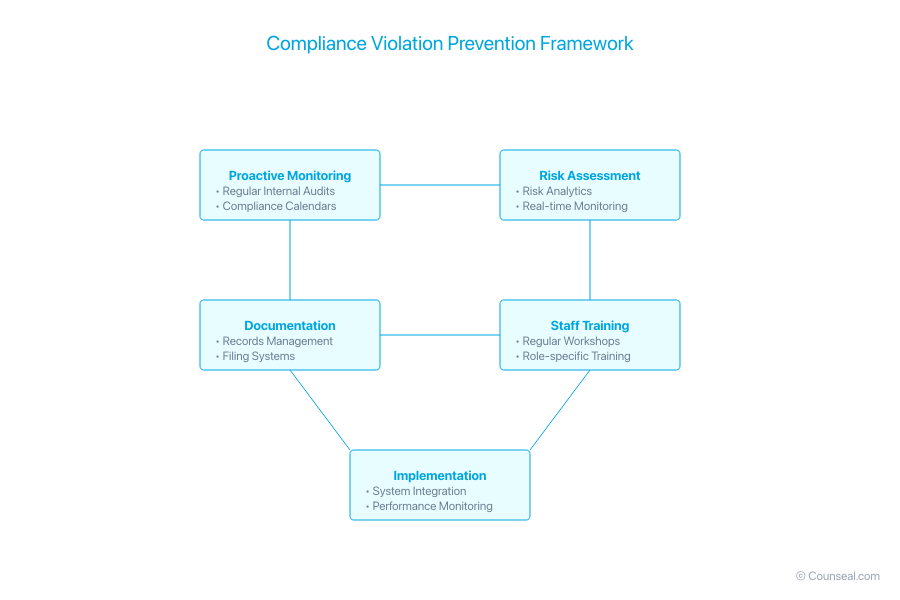
Prevention Framework
- Proactive Monitoring
- Regular internal audits
- Compliance calendars
- Update tracking systems
- Staff Training
- Regular workshops
- Compliance updates
- Role-specific training
Technology Solutions for Compliance
Essential RegTech Tools
- Compliance Management Systems
- Document tracking
- Deadline monitoring
- Automated reporting
- Risk Assessment Tools
- Real-time monitoring
- Risk analytics
- Compliance scoring
Implementation Guide
- Assessment Phase
- Current system evaluation
- Requirements analysis
- Solution selection
- Integration Phase
- System setup
- Staff training
- Performance monitoring
Practical Compliance Checklists
Startup Compliance Checklist
- Business registration (CAC)
- Tax registration (FIRS)
- Industry-specific licenses
- Employment documentation
Ongoing Compliance Checklist
- Annual returns filing
- License renewals
- Regulatory updates monitoring
- Staff training records
Conclusion and Action Steps
Understanding and maintaining regulatory compliance is crucial for business success in Nigeria. Take these immediate steps:
- Assess Your Current Position
- Identify applicable regulations
- Review compliance status
- Document gaps
- Develop Your Strategy
- Create compliance calendar
- Allocate resources
- Implement monitoring systems
- Seek Professional Support
- Legal consultation
- Compliance expertise
- Regular audits
Need expert guidance on regulatory compliance? Visit counseal.com/start for professional support.
Up next:

Navigating Employment and Labour Laws in Nigeria

Understanding Car Insurance in Nigeria: A Guide for Savvy Motorists